Burns Road Memories: Why Haleem Demands Twelve Hours
By Mr. Haleem · 2026-07-06 · 4 min read
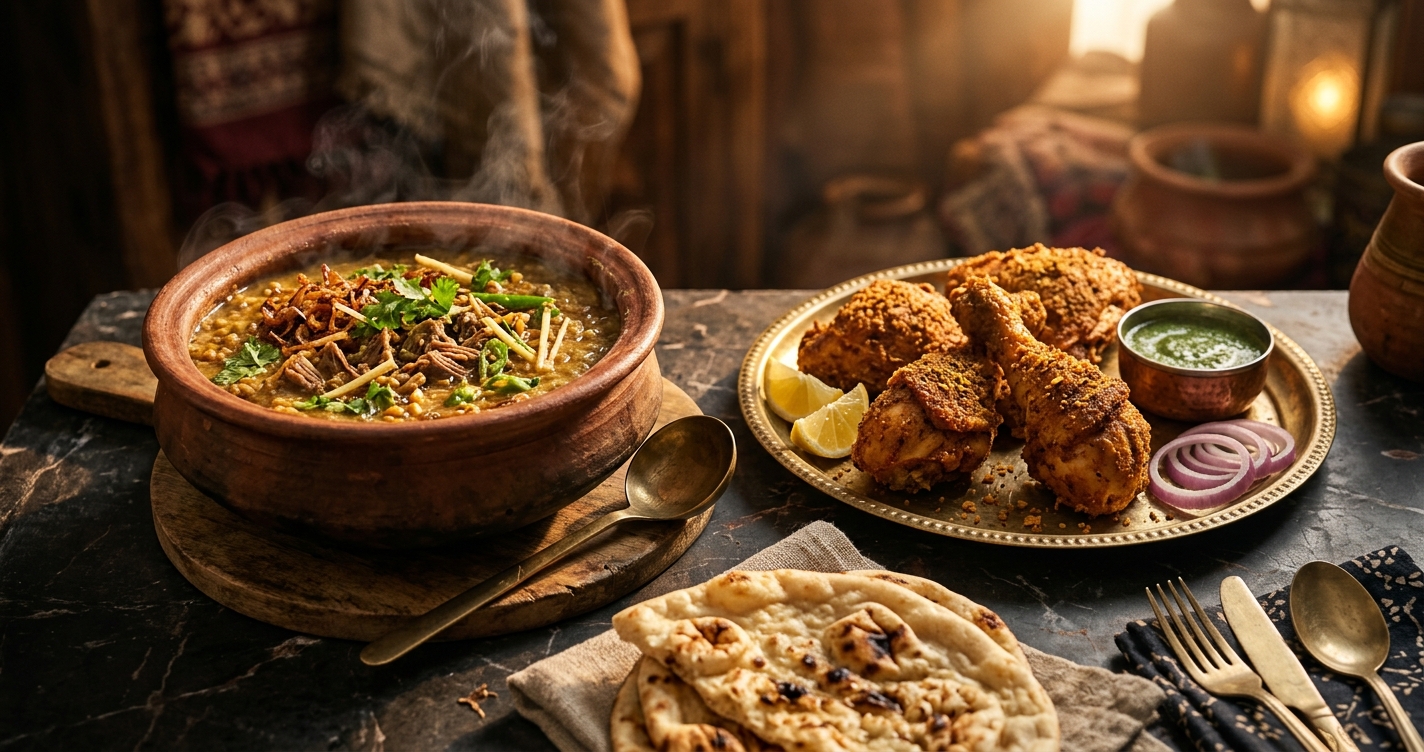
Before Houston, there was Burns Road. Before the degh, there was patience. Here's why our haleem still refuses to be rushed.
The Street That Taught Us Everything
If you've ever walked Burns Road at night, you know the sound before you see anything. The clank of a steel karchchi scraping the bottom of a massive degh. The hiss of hot oil hitting masala. Someone shouting an order over the traffic. And underneath all of it — that smell. Wheat, lentils, beef bone, fried onion, garam masala. It hangs in the warm air like the street itself is cooking.
That's where our haleem was born. Not in a recipe book. On a street in Karachi where the same families have been stirring the same pots for generations.
What Burns Road Got Right
Haleem on Burns Road wasn't fancy. It was honest food made for people who wanted something substantial — laborers finishing a shift, families out for a Saturday evening, students grabbing a quick plate before heading home. What made it special wasn't presentation. It was the cook.
A few things the old stalls understood:
- The grain-to-meat ratio matters. Too much wheat and it turns into porridge. Too much meat and it loses that silky, slow-blended texture.
- The masala has to layer, not dump. Whole spices in the oil first. Ground spices later. Each one given a moment.
- The tarka is the final word. Fried onion, green chilies, fresh coriander, a squeeze of lemon. It's not garnish. It's the last hand on the dish.
- You can't rush it. Period.
Why Twelve Hours
People ask us why our Beef Haleem takes so long. The honest answer is that anything shorter isn't really haleem — it's lentil stew pretending.
Here's what happens across those twelve hours:
The First Three Hours
Meat and bones go in with water and whole spices. The goal isn't flavor yet — it's stock. Deep, gelatinous, bone-heavy stock. You skim, you wait, you let the bones give up everything they have.
Hours Four Through Eight
Wheat, barley, chana dal, and other lentils join the pot. Now the stirring begins. And it doesn't stop. The grains soften, break down, and slowly merge with the meat and stock. This is where the texture is built. If you rush this stage, you get lumps. You get separation. You get something that looks like haleem but doesn't eat like it.
The Final Stretch
The meat has fallen apart by now — shredded by time, not by a fork. The entire pot has turned into something thick and glossy. This is when we add the masala base: fried onions, ginger-garlic, red chili, coriander powder, turmeric. It folds in and the degh darkens. The smell changes from flat and starchy to round and roasted.
Then the tarka. Sizzling oil, fresh fried onion, slit green chilies poured over the top. The whole kitchen holds its breath for a second.
Why We Don't Cut Corners
In Houston, everything moves fast. We understand that. But some things came here from Karachi carrying a different kind of time.
Our Beef Haleem starts before sunrise. Our Koozi (Chicken) Haleem — lighter, fragrant with its own spice blend — follows a similar patience. Both are stirred by hand. Both sit in the degh until they're ready, not until the clock says so.
We're not trying to romanticize slow cooking. It's just the truth: haleem that's been cooked for four hours tastes like haleem that's been cooked for four hours. There's no fixing that with extra masala or a heavier tarka. The depth either is there or it isn't.
The Table It Belongs On
Growing up, haleem wasn't a weekend dish. It was an event. Someone would bring a fresh naan pack, tear pieces by hand, and lay out the toppings — lemon wedges, sliced onion, green chutney. Sometimes there'd be Beef Samosas on the side for the cousins who insisted on something crunchy. A cold Pakistani Cream Soda to wash it down. On Eid mornings, the table stretched longer and the portions doubled.
That's the feeling we're trying to recreate here. Not just the recipe. The table.
Come Hungry, Come Patient
If you've eaten haleem on Burns Road, you'll know the moment you taste ours whether we did it right. If you haven't — let us show you what twelve hours in a degh tastes like. Pair it with a Karachi Chicken Broast if you want the full spread. But the haleem is the story. It always has been.
Some things don't translate across an ocean. This one does — if you're willing to wait for it.
Browse the menu → · Catering trays → · More from the Mr. Haleem blog →