Burns Road Taught Us: Haleem Was Never Meant to Be Rushed
By Mr. Haleem · 2026-07-20 · 4 min read
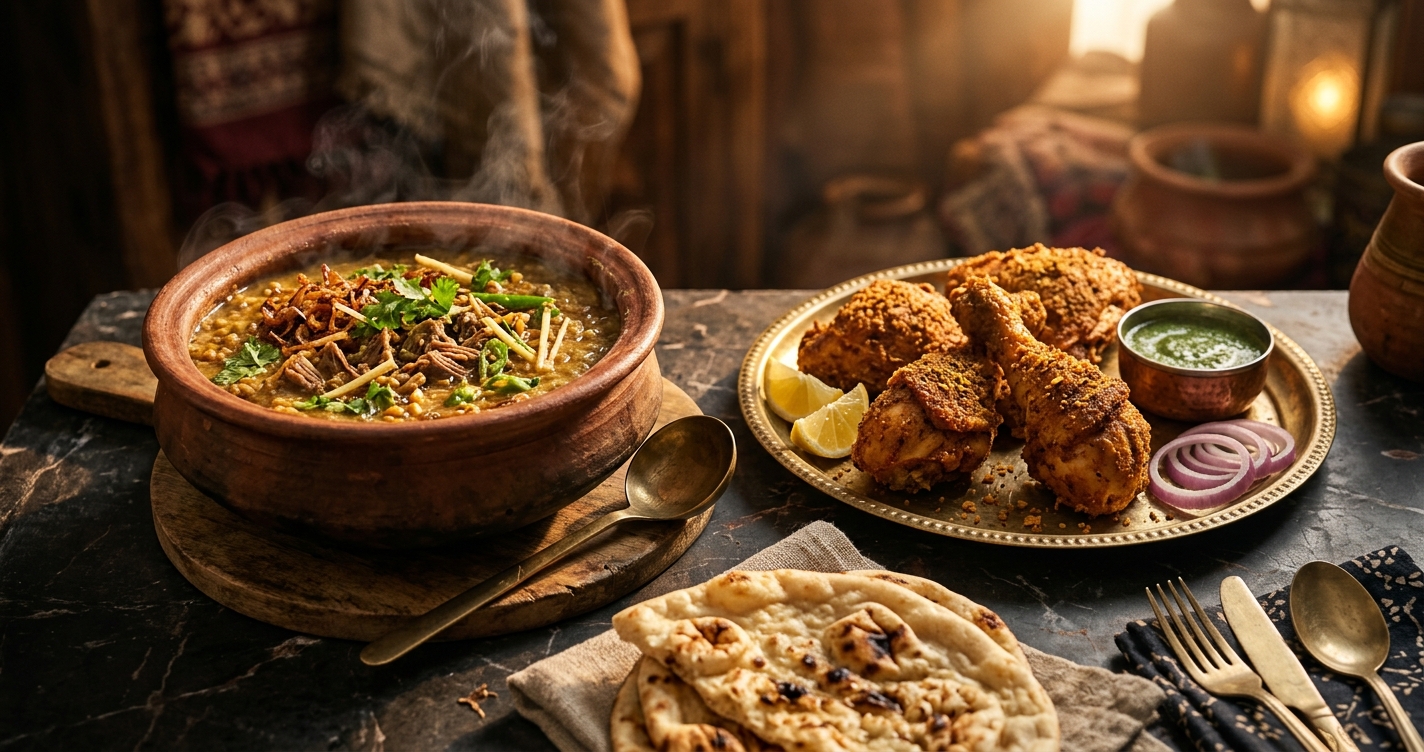
Some dishes carry a whole city in their masala. On Burns Road, haleem isn't fast food — it's a 12-hour patience test we refuse to rush.
Where the Degh Bubbles Before Dawn
If you've ever walked down Burns Road in the hours before Fajr, you already know the sound. It's not the traffic, not the shopkeepers arranging their stalls — it's the low, persistent murmur of haleem cooking in massive deghs, the kind that take two men to stir.
That sound is what brought Mr. Haleem's to Houston. Not a marketing plan. Not a trend. Just the belief that the dish taught to us on those Karachi streets deserves the same patience here as it gets there.
What Burns Road Gave Us
Burns Road is Karachi's food artery — a narrow, chaotic street that has fed lawyers, students, families, and night-shift workers for generations. It's where haleem stops being a dish and becomes a routine.
Growing up, the routine looked like this:
- You arrived before the line wrapped around the corner
- You waited because waiting was part of it
- You watched the cook pull a ladle through thick, slow-cooked haleem and knew it had been going since before you slept
- You ate with naan, not a spoon, because that's how it's done
That rhythm is baked into how we cook today.
Why Twelve Hours
Here's the honest truth: you cannot fake haleem. You cannot shortcut it. You cannot put it on a timer and walk away.
Our Beef Haleem starts with wheat, lentils, and beef that need to break down together — not separately, not in stages, but in the same degh, over the same low flame, for hours. The starches soften. The meat shreds into the grain. The masala deepens from bright to something almost dark and earthy. That transformation doesn't happen at high heat. It happens when you give it time.
Our Koozi (Chicken) Haleem follows the same principle — the chicken has to fall into the lentils, not sit on top of them. Twelve hours is not a number we picked for a menu. It's the minimum the dish demands before it tastes like itself.
What Happens in Those Hours
If you stood in our kitchen through a full cook, here's what you'd witness:
- Hours 1–3: Lentils and wheat soften slowly. Nothing dramatic yet — just heat and patience.
- Hours 4–6: The meat joins. The masala begins to bloom. The degh smells like a Karachi morning.
- Hours 7–9: Everything starts to collapse into each other. This is where the stirring doesn't stop.
- Hours 10–12: The haleem thickens. The color deepens. The tarka goes in at the end — hot oil, garlic, dried red chili — and the sound it makes tells you it's ready.
Skip any of that and you have something. It's just not haleem.
The Tarka Is the Signature
Every cook on Burns Road has their own tarka. It's the final stamp — the thing that separates one degh from the next. Ours leans into garlic and chili, pulled hot over the surface right before serving. It's not subtle. It's not supposed to be.
When we plate a bowl and drag fresh naan through it, that tarka is what hits first. Then the slow-cooked depth underneath. Then the texture — somewhere between porridge and stew, but neither. There's no English word for what haleem should feel like in your mouth. Urdu already has it.
Houston, Cooked the Karachi Way
We brought this here because Houston has the same energy Karachi has — people who work hard, eat late, and know when food is real. Our kitchen doesn't move fast. Our deghs don't move fast. The haleem doesn't move fast.
If you're looking for a quick lunch, we have our Karachi Chicken Broast, our Beef Samosas, a Naan Pack to share. If you want a Pakistani Cream Soda to wash it down, that's waiting for you too.
But the haleem — the Beef Haleem, the Koozi (Chicken) Haleem — that's the thing that asks you to slow down with it. Twelve hours in, and it still asks for one more.
Some things shouldn't be rushed.
Browse the menu → · Catering trays → · More from the Mr. Haleem blog →