Burns Road to Houston: Why Haleem Demands Twelve Hours
By Mr. Haleem · 2026-07-06 · 4 min read
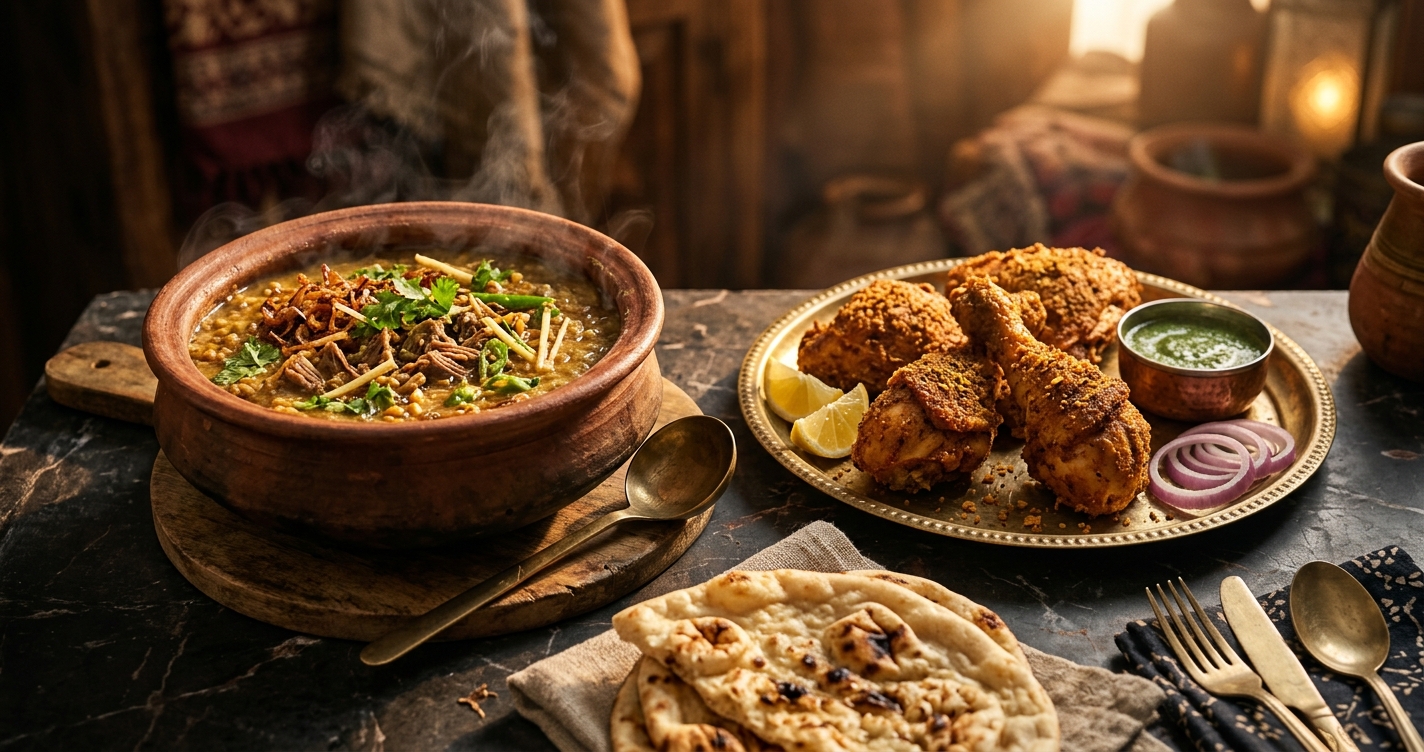
Authentic Karachi haleem isn't a recipe you speed up. It's a patience test passed down through deghs that never stop simmering. Here's our story.
Where the Smoke Never Clears
If you've ever walked Burns Road at night, you already know the smell before you see the shops. It hits you somewhere around the corner of M.A. Jinnah Road — a deep, savory fog that clings to your clothes and follows you home. That smell is haleem. Not the polite, cafeteria version. The real thing, cooked in massive iron deghs that have been going since before sunrise, their surfaces thick with a slow brown skin that the cook lifts and stirs back in with a wooden paddle the size of a cricket bat.
My father used to take me there as a boy. We'd sit on a wooden bench that wobbled on the uneven pavement, tear naan with our fingers, and eat from the same plate. He never explained what made it good. He'd just point at the degh and say, "Look how long it's been working."
That was the lesson. Not a recipe. Not a trick. Just time.
What Actually Happens in Twelve Hours
People ask why we don't make haleem faster. The honest answer is that we don't know how. There's no shortcut that produces the same result. Here's roughly what those hours look like at Mr. Haleem:
- Hours 1–3: Wheat, lentils, and beef go into the degh with water and a base of masala. Nothing dramatic happens yet. It looks like soup. Patience hasn't paid off.
- Hours 4–6: The grains start breaking down. The meat softens. You stir every few minutes now because the bottom wants to catch and burn.
- Hours 7–9: Everything thickens. The lentils dissolve into the wheat. The beef shreds on its own. This is where the texture people recognize starts forming.
- Hours 10–12: The final stir-down. The haleem pulls away from the sides of the degh in a slow, heavy wave. The masala is dark and deep. The surface glosses with rendered fat. It's done when it's done — and not before.
There's no alarm that goes off. You learn to feel it.
The Tarka Is the Signature
Cooking the base is only half the work. The tarka — the fried onion, oil, and spice mixture folded in at the very end — is what tells you where a haleem comes from. Karachi haleem, the Burns Road style, leans into a sharper masala profile than the Lucknow or Hyderabadi versions. It's not timid. The ginger is forward. The fried onions are dark, not golden. A squeeze of lemon and a handful of fresh green chilies on top aren't garnish; they're structural.
When we serve our Beef Haleem here in Houston, that's what we're trying to land. Not a watered-down version for unfamiliar palates. The real Karachi thing — the way it tasted on that wobbly bench.
Two Haleems, One Philosophy
We also make a Koozi (Chicken) Haleem, which is a different animal entirely. Lighter in color, with a spice blend that leans warmer rather than sharper. Some of our regulars prefer it for weeknights. Others save it for Eid mornings when the table is full and nobody wants to stand over a stove. Both versions go through the same slow process. The chicken breaks down faster than beef, but we still give it the full time because the wheat and lentils need it. The meat isn't the only ingredient that has to disappear into the pot.
It Doesn't Work Alone
Haleem on Burns Road was never served by itself. It came with hot naan, sometimes a side of broast, and always something cold to drink. That's the plate we're trying to recreate at Mr. Haleem:
- Naan Pack — fresh, blistered, torn by hand
- Karachi Chicken Broast — the crispy, spiced counterpart to a soft bowl of haleem
- Beef Samosas — for the people who say they're not that hungry, then eat three
- Pakistani Cream Soda — the sweet, cold punctuation at the end of a heavy meal
Why We Keep the Clock
Every morning, before we light the burners, someone asks the same question in every language this kitchen has spoken: Is it ready yet? And every morning the answer is the same. Not yet. Come back in twelve hours.
That's not stubbornness. That's respect for the degh, for the people who taught us, and for the people sitting down to eat. Some things simply refuse to be rushed. Haleem is one of them.
We hope you taste the difference.
— The Mr. Haleem Kitchen
Browse the menu → · Catering trays → · More from the Mr. Haleem blog →