Burns Road to Houston: Why Our Haleem Takes 12 Hours
By Mr. Haleem · 2026-08-03 · 4 min read
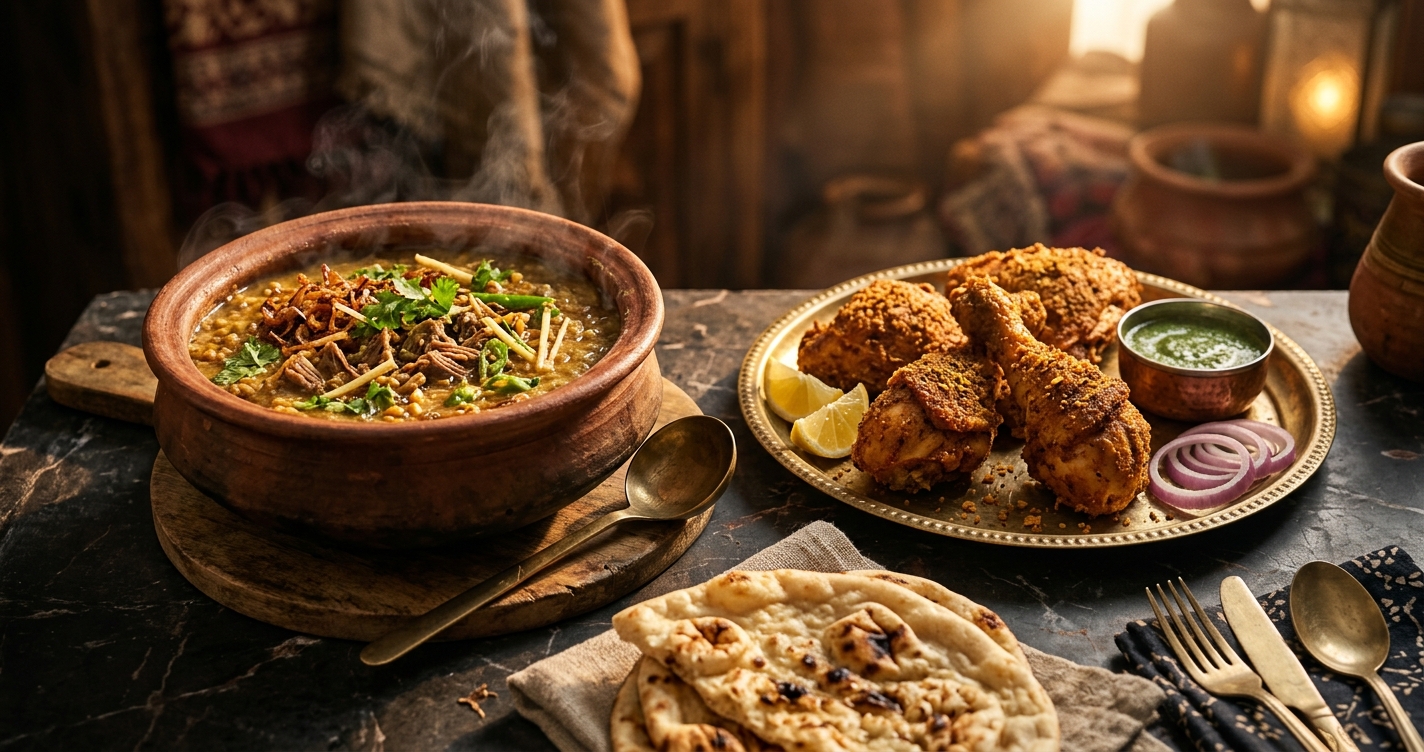
There's a reason the degh never stops stirring. Burns Road taught us that haleem isn't a recipe — it's patience you can taste.
The Street That Taught Us Everything
If you've ever walked Burns Road at night, you already know the smell. It hits you half a block before you see the deghs — this deep, iron-rich, toasted wheat aroma layered with ghee and masala that's been working for hours. That's not a cooking smell. That's a history smell. It means someone started before fajr and hasn't stopped.
That's where we learned what haleem actually is. Not the shortcut version. Not the twenty-minute pot. The real thing — the kind that makes you close your eyes on the first bite.
What Burns Road Gets Right
On Burns Road, haleem isn't fast food. It's the slowest food there is. And that's exactly the point.
- The wheat and lentils soak overnight, separately, because they have different temperaments.
- The beef goes in raw with whole spices — no searing, no shortcuts. It breaks down in its own time.
- The stirring never stops. Not for a phone call, not for a tea break. You stop stirring, the bottom catches, and the whole degh is finished.
- The tarka comes at the very end, hot enough that the oil shimmers but never smokes.
We watched old cooks do this with one hand and drink chai with the other, like the stirring was just breathing — something you do without thinking. That's the standard. That's what we brought to Houston.
Why Twelve Hours and Not Eight
People ask us why our Beef Haleem takes so long. The honest answer is that eight hours gives you something good. Twelve hours gives you something that falls apart on the spoon, where the beef and the wheat and the barley have stopped being separate ingredients and become one thing. You can't fake that texture. You can't whisk it in. You can't thicken it with anything except time.
Here's what actually happens during those hours:
Hours 1–3: The lentils break down into a coarse paste. The wheat is still stubborn. Nothing looks like haleem yet.
Hours 4–6: The beef starts surrendering. The fibers pull apart. The masala darkens. This is where most kitchens stop. We're not even halfway.
Hours 7–9: Everything merges. The stirring gets heavier because the texture is tightening. You start tasting the smokiness from the bottom of the degh.
Hours 10–12: The magic. The ghee rises to the top in a golden layer. The spoon leaves a trail that fills back in slowly. This is when you know it's done — not because a timer says so, but because the degh tells you.
The Tarka Changes Everything
The final tarka is where Burns Road cooks would argue for hours — and we still follow their rules. Hot ghee, sliced onions cooked dark but never burnt, dried coriander, cumin seeds crackling the second they hit the oil. Pour it over the finished haleem and listen. That sound — that sharp, spitting welcome — is the last thing the degh hears before it's ready.
That tarka is what makes the first bite taste like Karachi. Not the spice blend alone. Not the meat. The finishing.
What We Make at Mr. Haleem
Everything we serve comes from that Burns Road philosophy: don't rush what doesn't want to be rushed.
- Beef Haleem — our twelve-hour degh, finished with traditional tarka. The dish that started all of this.
- Koozi (Chicken) Haleem — a lighter version, but still slow-cooked until the chicken shreds itself into the wheat.
- Karachi Chicken Broast — marinated overnight, fried crisp. The street snack we grew up standing in line for.
- Beef Samosas — hand-folded, properly spiced, no corners cut.
- Naan Pack — fresh naan, because haleem without naan is just a sad situation.
- Pakistani Cream Soda — the one that tastes like every Eid table you remember.
The Table You Remember
We're not trying to reinvent anything. We're trying to give Houston the plate that Burns Road gave us — the one that made us fall in love with this food before we understood what was in it. The degh runs overnight. The stirring doesn't stop. And when you sit down and take that first bite, you'll know why we don't rush it.
Browse the menu → · Catering trays → · More from the Mr. Haleem blog →