Muharram and Haleem: A Tradition That Nourishes Body and Soul
By Mr. Haleem · 2026-05-12 · 4 min read
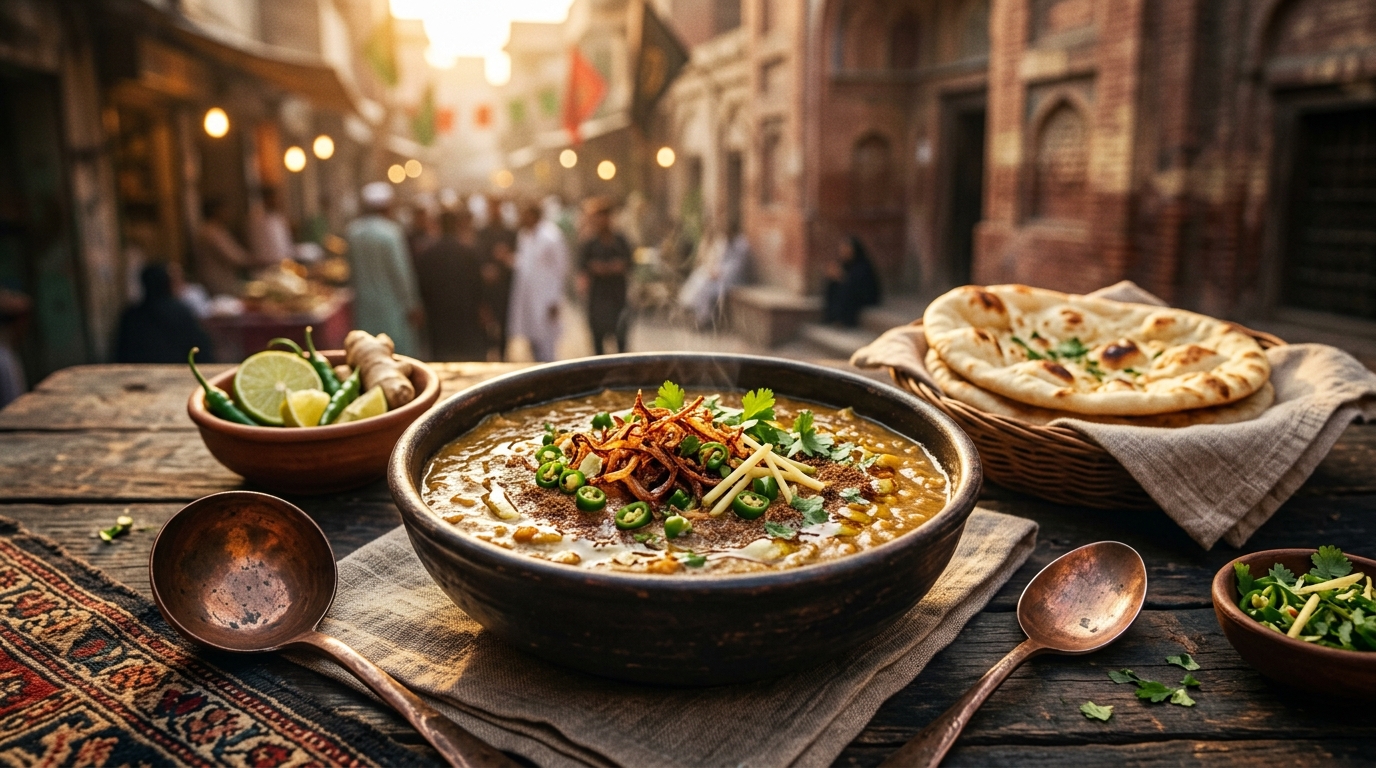
At Mr. Haleem, we honor the deep connection between Muharram and haleem—a dish that's always been about more than just food.
The Degh That Connects Generations
Every year when Muharram arrives, something shifts in our kitchen. The rhythm changes. The degh—our large traditional cooking pot—takes center stage, and we begin the slow, patient process that haleem demands. This isn't just another busy season for us. It's a time when we remember why this dish exists in the first place.
Haleem during Muharram isn't about business. It's about continuity. It's about honoring a tradition that stretches back centuries, one that turned a humble combination of wheat, lentils, and meat into something that could feed entire communities during days of mourning and reflection.
Why Haleem Became Sacred
In the early days of Islam, during times of grief and contemplation, communities needed nourishment that was both practical and meaningful. Haleem emerged as that answer. Slow-cooked through the night, stirred with intention, it became the dish that fed hundreds from a single degh.
The beauty of haleem is in its nature:
- It requires patience — you can't rush the 6-8 hour cooking process
- It feeds many — a little goes a long way, perfect for communal gatherings
- It's complete nutrition — protein, fiber, and energy in every bowl
- It's humble — no expensive ingredients, just time and care
During Muharram, when families gather for majalis and communities come together, haleem becomes the thread that connects everyone. It's served after evening gatherings, offered to neighbors, distributed to those in need. The act of making it, of stirring that degh for hours, becomes a meditation in itself.
What We've Learned From Our Community
Running Mr. Haleem in Houston, we've watched our customers during Muharram. The elderly aunty who orders extra portions to distribute in her neighborhood. The young professional who'd never made haleem himself but wants to carry on what his grandmother did back in Karachi. The family who pre-orders for their tenth day gathering because, as they told us, "It wouldn't be Muharram without proper haleem."
These moments taught us something essential: we're not just selling food. We're preserving a ritual.
How We Honor the Tradition
Our approach to haleem during Muharram doesn't change from how we make it year-round, because we make it the right way every single time:
The Overnight Simmer
Our Beef Haleem starts the night before. Seven different lentils and cracked wheat join beef in the degh. Whole spices—cinnamon sticks, black cardamom, bay leaves—infuse slowly. No shortcuts. No pressure cookers trying to mimic what only time can do.
The Hand-Stirring
There's a moment, around hour five, when everything begins to break down and merge. The barley and wheat become creamy. The meat falls apart. The lentils lose their individual identity. This is when the real work begins—constant stirring to achieve that signature haleem texture. Smooth but with character. Thick but not heavy.
The Tarka That Completes It
That final tempering—ghee, garlic, ginger, and our masala blend—isn't just garnish. It's the awakening. The aroma that rises from that hot oil hitting the haleem is what our grandmothers knew, what the streets of Karachi know, what every proper haleem must have.
Beyond the Bowl
When you order haleem from us during Muharram—or any time—you're receiving more than dinner. You're getting a bowl of intention. Of history. Of a dish that's fed mourners and celebrants, that's brought communities together, that's been stirred by countless hands over countless nights.
We serve it with fresh naan, sliced ginger, green chilies, lemon wedges, and fried onions on the side. Not because that's trendy, but because that's how it's meant to be. How it's always been.
This Muharram, whether you're observing or simply craving something authentic, we're here. The degh is on. The haleem is slow-cooking. And we're honored to be part of your table, just as this dish has been part of tables for generations.
Browse the menu → · Catering trays → · More from the Mr. Haleem blog →