The Power of Haleem: Taste, Texture, or Nostalgia?
By Mr. Haleem · 2026-05-07 · 4 min read
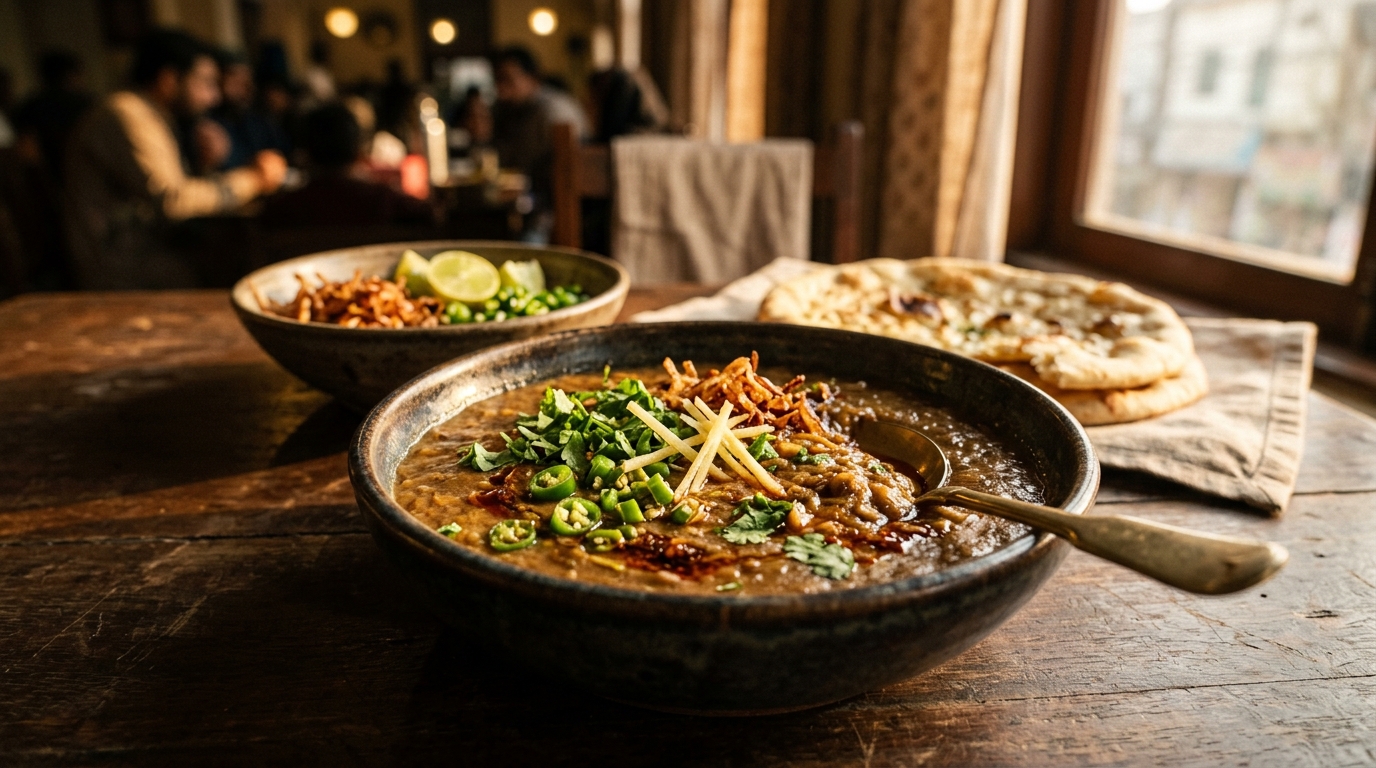
At Mr. Haleem, we believe haleem is more than food—it's memory, comfort, and home, slow-cooked in a degh until every grain surrenders.
Why Does Haleem Move Us?
There's something about haleem that bypasses the tongue and speaks directly to the heart. Maybe it's the way the steam rises from the bowl, carrying whispers of slow fire and patience. Maybe it's the first spoonful—thick, warm, impossibly smooth—that reminds you of winter nights in Karachi, or your nani's kitchen during Ramadan, or that one street corner near Tariq Road where the degh never stopped simmering.
At Mr. Haleem, we've spent years asking ourselves: what makes haleem so powerful? Is it the taste? The texture? Or is it something deeper—something that lives in memory?
The answer, we think, is all three.
Taste: Layers That Take Time
Haleem doesn't announce itself with heat or sharpness. It unfolds slowly, the way good stories do.
Our Beef Haleem and Koozi (Chicken) Haleem start with hours over low flame. Meat, lentils, wheat, and barley cook together until boundaries disappear. The spices—cardamom, cloves, a careful hand with garam masala—are added not for drama, but for depth. The tarka at the end, that final sizzle of ghee and fried onions, pulls everything into focus.
What you taste isn't just ingredients. It's time. Patience. The kind of cooking that can't be rushed, no matter how fast the world spins outside.
The tarka makes all the difference
We finish each bowl with:
- Crispy fried onions, browned until they're almost sweet
- Fresh ginger julienne for brightness
- A squeeze of lemon to wake everything up
- Green chili and coriander, because some heat should be optional
You stir it all in. The flavors bloom. That's when haleem becomes haleem.
Texture: Comfort You Can Feel
Haleem's texture is what people remember most. That silky, almost porridge-like consistency that coats the spoon, warm and forgiving.
It shouldn't be watery. It shouldn't be stiff. It should fall somewhere between a hug and a meal—something you can eat slowly, with naan or on its own, and feel anchored.
At Mr. Haleem, we cook our haleem the old way. No shortcuts. No pressure cookers that turn everything into mush too fast. Just a proper degh, steady heat, and a wooden spoon that keeps moving. The wheat and lentils break down completely. The meat shreds into fine strands that disappear into the whole.
That texture—the way it holds together without clumping, the way it feels both rich and light—doesn't happen by accident. It happens because someone stood there, stirring, tasting, adjusting, the way cooks have done in Karachi for generations.
Pair it with our Naan Pack, fresh and warm, and you've got a meal that doesn't just satisfy hunger. It satisfies something older than that.
Nostalgia: The Secret Ingredient
But here's what we believe most deeply at Mr. Haleem: the real power of haleem isn't just in what's inside the bowl. It's in where the bowl takes you.
For some, it's Eid mornings, the whole family gathered, sleepy and happy. For others, it's winter in Karachi, when the air smells like rain and wood smoke, and street vendors ladle haleem into clay bowls under flickering bulbs. For others still, it's simply comfort—the kind of dish you eat when you need to feel held.
Nostalgia isn't a garnish. It's built into every batch we make. Because haleem was never meant to be fast food. It was meant to slow you down. To remind you that good things take time. That food cooked with care carries the memory of all the hands that came before.
Our Take
So is haleem about taste? Texture? Nostalgia?
Yes.
It's the rare dish that delivers on all three. And at Mr. Haleem, we don't take that lightly. Every degh we cook, every bowl we serve, is our way of honoring what haleem has always been: more than a meal. A bridge. A memory. A moment of home.
Come taste it for yourself. Bring someone you love. And if you close your eyes between bites, don't be surprised if you find yourself somewhere else entirely.
Browse the menu → · Catering trays → · More from the Mr. Haleem blog →